Meet the Team: Paul Morrison, Director of Business Development
At CRE, our experience is built on the people behind our products and solutions. In the first of our new Meet the Team series, we sit down with Paul Morrison, Director of Business Development, to talk about his career in subsea and marine technology, how the industry has evolved, and his role in CRE’s growth. From changing technologies and autonomous underwater vehicles to international markets and what lies ahead for CRE, he shares his perspective on an industry that never stands still.
1. You’ve worked in the subsea and marine technology sector in Aberdeenshire since the early 2000s. How have you seen the industry evolve over that time?
I've been in the industry since 1996, starting out as a design engineer working on subsea connectors, so I've seen a huge amount of change. Back then, the sector was very oil and gas centric, and the technology was nowhere near where it is today.
One of the biggest enhancements has been in subsea imaging and sonar technology. When I started, we were using what we'd now consider very basic systems. Although amazing in their own right at that time, the image profiling was limited. Today the image quality of sonar, cameras, laser scanners, especially when interconnected is incredible. Let’s take the surveying of the Titanic as an example, we have gone from being able to locate the vessel and capturing basic footage to now being able to create a full 3D profile of the ship and effectively being able to do a fly through of it both externally and internally.
The drive to go deeper, gather more information and operate in increasingly challenging environments has accelerated technology development across the sector. The amount of data we're now collecting and transmitting is enormous. Fibre optics, advanced sensors, cameras and communications systems have transformed what's possible, and that means products like ours have had to evolve alongside them.
AI is another area that's beginning to have an impact, and I think we're only scratching the surface of what it will do for the industry. As someone who's been in the industry for a wee while, it's a continual process of relearning and keeping up with technology.
Interestingly, there was a period where everything was focused on becoming smaller and more compact. Now, it's much more about data, storage and long-duration operations. We're seeing resident ROVs and AUVs staying subsea for extended periods, collecting huge volumes of information and carrying out tasks autonomously. To make that possible, systems often need greater storage, more capability and, in some cases, larger infrastructure.
The ocean remains a hostile environment. Saltwater can be corrosive to equipment and system, so reliability is paramount. No matter how advanced the technology becomes, you still need the right materials and engineering to make sure equipment survives and performs over the long term.
2. Since joining CRE Marine in 2018, what have been some of the most significant milestones or achievements for the business?
When I joined in 2018, the goal was really to put the CRE product line firmly into the market and grow it. At that point, we had a connector range, but it was largely being used for specialist projects and a relatively small number of customers.
Using the experience that I had across different sectors, we were able to understand where the opportunities were, who the key players were, and where customers were experiencing challenges with existing suppliers. That allowed us to position ourselves effectively.
One of the biggest achievements has been the transformation of the business itself. Historically, we were primarily seen as a moulding shop that happened to produce a handful of connectors. Over time, we've shifted that perception and become a recognised connectivity solutions provider. Today, our connector products make up around half of our business, and in some areas even more.
Being part of larger organisations such as Trexon and now Amphenol has also been a major milestone. What's been great is that we've been allowed to retain our identity as CRE while gaining access to investment, resources and global opportunities that simply weren't available to us as an independent company. It allows us to invest in growth, attend international events and build relationships around the world in ways we couldn't before.
3. CRE has built long-standing relationships across the marine and offshore sectors. What do clients value most about working with you?
We don't really see ourselves as just a connector company. We see ourselves as a connectivity solutions provider, and I think that's one of the biggest differences clients notice.
When customers approach CRE, we spend time understanding their application and what they actually need, rather than simply selling them a product off the shelf. A lot of suppliers will offer a standard solution and ask customers to work around it. Our approach is different. We want to understand exactly what the application requires and provide the optimum solution for that environment.
That means having honest conversations from the outset. We'll explain what's possible, what's not possible and where the limitations are. We don't like saying no, but we'd rather be upfront and realistic than promise something we can't deliver.
The other key factor is trust. It's one thing to have a good conversation at the start of a project; it's another thing entirely to deliver what you've promised. Over the years we've built long-term relationships because our products are reliable, robust and perform as expected in the field.
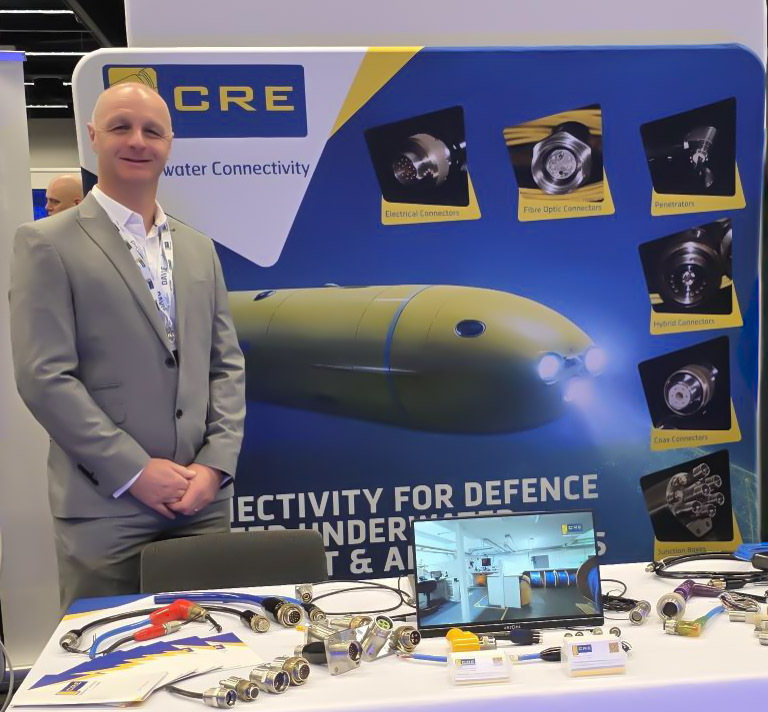
4.Does that approach reduce the amount of research and development work customers need to do themselves?
Absolutely. A good example is customers who previously bought connectors and then had to spend significant time wiring and assembling everything themselves. Their engineers and technicians could spend days or even weeks preparing systems.
What we do is provide a fully furnished, plug-and-play solution. We work around their existing designs, supply the complete assembly and make sure everything is ready to go when it arrives.
That saves customers a huge amount of time and allows their engineers and technicians to focus on more valuable work. Rather than spending time wiring connectors, they can concentrate on developing and improving the systems they're actually building.
"The other key factor is trust. It's one thing to have a good conversation at the start of a project; it's another thing entirely to deliver what you've promised"
- Paul Morrison, Director of Business Development
5. How important is diversification in the market today?
For us, diversification is absolutely critical.
We operate across a number of subsea sectors, and that's important because markets naturally rise and fall at different times. Historically, the business was heavily linked to oil and gas, which meant that when that sector slowed down, the impact was felt across the company.
Over the years we've deliberately expanded into areas such as renewables, defence, ocean science and aquaculture. The benefit of that approach is that when one sector experiences a downturn, another is often performing strongly.
It allows us to ride the wave, or sometimes ride the bad wave, and maintain stability as a business. We can't afford to pigeonhole ourselves into a single market. The more diverse we are, the more resilient we become.
6. This year you're attending major events all over the world. What value do these international exhibitions and conferences bring to CRE?
For myself and the team, international exhibitions are a great opportunity to showcase CRE on a global stage. We're well known in the UK and increasingly recognised across Europe and the US, but these events allow us to introduce the business to entirely new regions and markets.
They've helped us strengthen our position in growing markets. Brazil is a great example. We've built strong relationships there and established a solid foundation of customers, but there is still huge potential for growth. Being on the ground, meeting people face to face and understanding the local market helps us build on that momentum.
The other benefit is education. We often meet customers who only know the handful of connector suppliers they've used historically. These events give us an opportunity to show that there are alternative solutions available and that there are different ways of approaching connectivity challenges. It helps broaden people's understanding of what's available in the market and gives us a chance to demonstrate where CRE can add value.
7. What key trends or challenges do you expect to dominate conversations across your industries in 2026?
The biggest topic right now is security.
Whether it's seabed security, infrastructure security, energy security or communications security, it's something that comes up in almost every conversation. With ongoing global instability and conflict, there is a huge focus on protecting critical subsea infrastructure.
People are becoming increasingly aware that so much of our communications and energy networks rely on infrastructure sitting on the seabed. Fibre optic cables, telecommunications systems and power transmission networks are all critical assets, and protecting them has become a major priority.
As a result, we're seeing significant growth in areas such as seabed monitoring, surveillance, autonomous systems and mine countermeasure technologies. Organisations want to understand what's happening underwater and put preventative measures in place before problems occur.
What's encouraging is that many of these conversations are focused on defence, prevention and protection. The emphasis is on surveillance, monitoring and safeguarding infrastructure rather than responding after something has happened.
From the events and customer discussions we've had over the last 12 to 18 months, I only see that trend continuing. The demand for technologies that improve visibility, awareness and security beneath the surface is growing rapidly.
8. Innovation continues to move quickly across subsea and marine technology. What areas of development are you most excited about at the moment?
For me, it's vehicle autonomy. We're already seeing autonomous vehicles doing increasingly complex tasks, but what's really exciting is the move towards longer-duration operations. Vehicles are being developed that can remain deployed for months at a time, carrying out missions, collecting data and operating with very limited human intervention.
We're also seeing the emergence of concepts where multiple autonomous vehicles work together, covering large areas and gathering huge amounts of information far more efficiently than traditional methods.
The technology behind that is advancing incredibly quickly. Communications systems, sensors, storage capabilities and data transmission are all improving at a remarkable rate. These vehicles can collect vast amounts of information, surface periodically, transmit data back to operators and then continue their mission.
The ocean covers the majority of our planet, yet we still know relatively little about it. Technologies that allow us to better understand and map the seabed are hugely important, whether that's for science, defence, energy or environmental monitoring.
From our perspective, it's about making sure the connectivity technology can support that innovation. The connector might seem like a simple part, but nothing works unless every component is connected properly. We need to make sure data can be transmitted reliably and systems can operate effectively at depths of 6,000 metres and beyond.
It's fascinating to see what's being developed and how quickly the technology is moving forward.
"The ocean covers the majority of our planet, yet we still know relatively little about it. Technologies that allow us to better understand and map the seabed are hugely important, whether that's for science, defence, energy or environmental monitoring."
- Paul Morrison, Director of Business Development
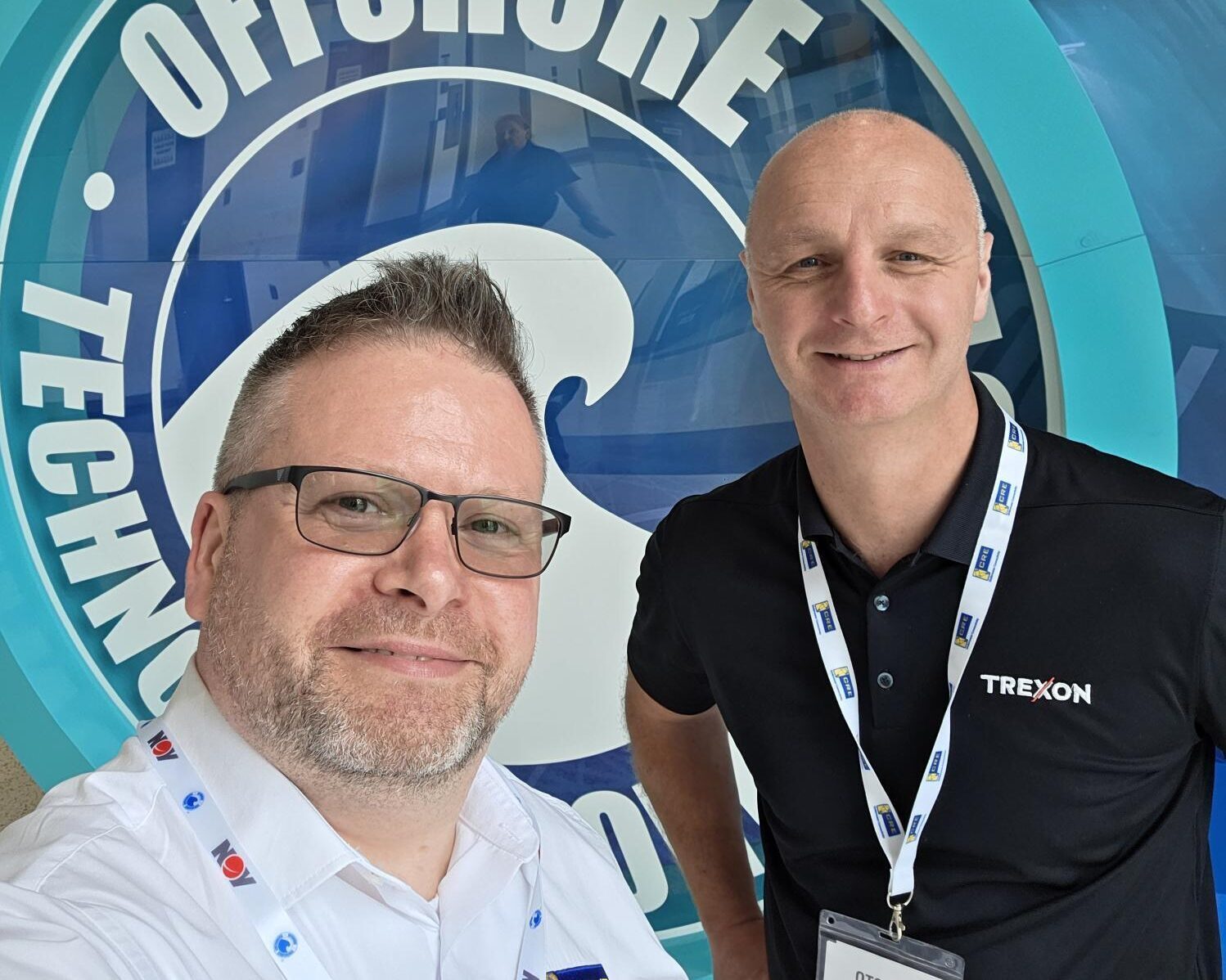
9. As someone who has spent over two decades in the industry, what advice would you give to younger professionals considering a career in marine or subsea technology?
The biggest piece of advice I would give is simple: be curious.
It’s often said that we know more about the surface of the moon than we do about our own oceans, and there's a lot of truth in that.
Scientists still believe there are vast numbers of marine species that have yet to be discovered. New environments, new ecosystems and new technologies are being explored all the time. Whether it's marine biology, ocean science, engineering, renewable energy or subsea technology, there is still so much to learn.
What excites me is that every year we're discovering something new. We work with marine biologists and research organisations that are constantly uncovering new information about the oceans and the life within them.
There are also huge challenges to solve, from environmental monitoring and conservation through to energy transition, resource management and climate change. Understanding what's happening in our oceans will be critical for the future.
Being able to contribute a small, or even big part in that must be exciting.
10. You've attended and exhibited at industry events around the world over the years. What's the most rewarding part of representing CRE?
For me, it's the people.
I've always been a people person, and one of the things I enjoy most is meeting new people, learning what they're doing and understanding the challenges they're trying to solve.
Of course, you're there to promote your company and showcase your products, but there's a lot more to it than that. Every event is an opportunity to learn. You meet customers, suppliers, partners and even competitors, and every conversation gives you a different perspective on what's happening across the industry.
I've always believed that every day is a school day. No matter how long you've been in the industry, there's always something new to learn, whether it's a new technology, a different application or a new way of approaching a problem.
11. Finally, it has been a busy start to the year already, but what's one thing you're most looking forward to for CRE over the next 12 months?
What excites me most is seeing where the next stage of growth takes us.
We've already benefited enormously from being part of larger organisations, first with Trexon and now as part of Amphenol. As we become more integrated and people better understand who we are and what we do, I think a lot of new opportunities will open up.
A major milestone for us this year is moving into a new facility. The new site will be around four times larger than our current premises and will give us the space we need to continue growing. It allows us to invest in new capabilities, bring in more people and create an environment that's built for the future.
It's particularly exciting because it coincides with another significant milestone. Next year we'll be celebrating CRE's 25th anniversary, so it's a fantastic time for the business. We'll be entering a new facility, continuing our growth journey and marking 25 years of the company at the same time.
For me, it's the combination of all those things that's exciting. We've got the backing, investment and opportunities to take the business further than ever before, and it feels like we're entering a really positive new chapter in CRE's story.
-----
Click to explore CRE Marine’s full range of products and services, or to discuss how we can support your next project with bespoke subsea engineering solutions, get in touch with the team today.
Follow CRE Marine on LinkedIn to stay up to date with the latest developments in subsea connectivity, technology, new product innovations, and industry insights.